


language
Search Results:
Choosing the right digital cutting table is a critical investment for packaging, signage, and manufacturing businesses. With various technologies and configurations available on the market, making an informed decision requires looking closely at your production needs.
Here is a comprehensive guide to help you choose the best digital cutting table for your facility.

Key Factors to Consider When Choosing a Digital Cutting Table
1. Application Requirements & Materials
-
Understand Your Materials: Are you cutting paper, corrugated cardboard, textiles, rubber, or dense foam?
-
Tool Versatility: Ensure the table supports multi-tool modules (such as oscillating knives, routing tools, and creasing wheels) to match your application variety.
2. Cutting Technology
Different operations require distinct technologies:
-
Knife Cutting (Oscillating/Drag Knives): Ideal for soft and flexible materials like cardboard, textiles, and gaskets.
-
Router Cutting: Necessary for rigid, high-density materials like acrylic, MDF, and composite panels.
-
Laser Cutting: Offers high precision for specific materials, though safety and material compatibility must be considered.
3. Automation Features
To maximize efficiency and lower labor costs, look for advanced automation features:
-
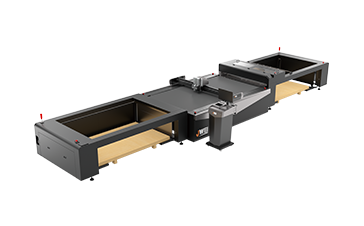
Automatic Material Feeding & Collecting: Ensures continuous, uninterrupted production.
-
CCD Camera Registration: Automatically identifies printed marks for precise contour cutting.
4. Software Compatibility & Speed
-
Ensure the system integrates smoothly with mainstream design software (e.g., CAD, Adobe Illustrator) and supports standard file formats like DXF, AI, and PDF.
-
Balance high cutting speed with mechanical precision to avoid compromising intricate designs.
Frequently Asked Questions (FAQ)
-
Q: What is the main advantage of a digital cutting table over traditional die-cutting?
-
A: Digital cutting tables eliminate physical mold costs entirely, allowing for instant prototyping, rapid small-batch customization, and zero lead time.
-
-
Q: How do I know which cutting tool I need on my digital table?
-
A: It depends on your primary substrates. For instance, oscillating knives work best for corrugated boards, while router tools are essential for rigid plastics and acrylics.
-
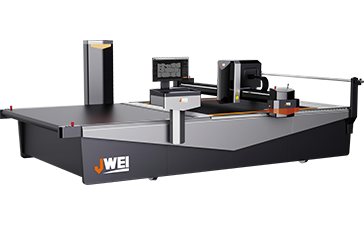
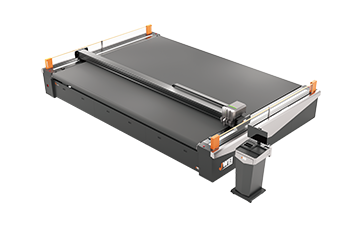
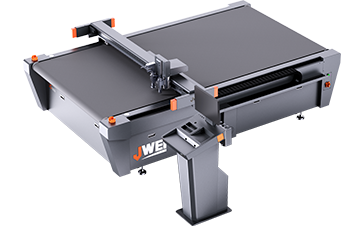
Looking for a reliable, high-performance solution? Explore JWEI Digital Cutting Tables or Contact Us Today for expert advice tailored to your production line!