


language
Search Results:
Choosing the right tool for your JWEI digital cutting machine is essential for maximizing processing speed, material yield, and edge quality. JWEI flatbed cutters feature versatile, modular tool heads to handle everything from delicate stickers to rigid composite panels.
Here is a breakdown of the core cutting tools and their primary functions.
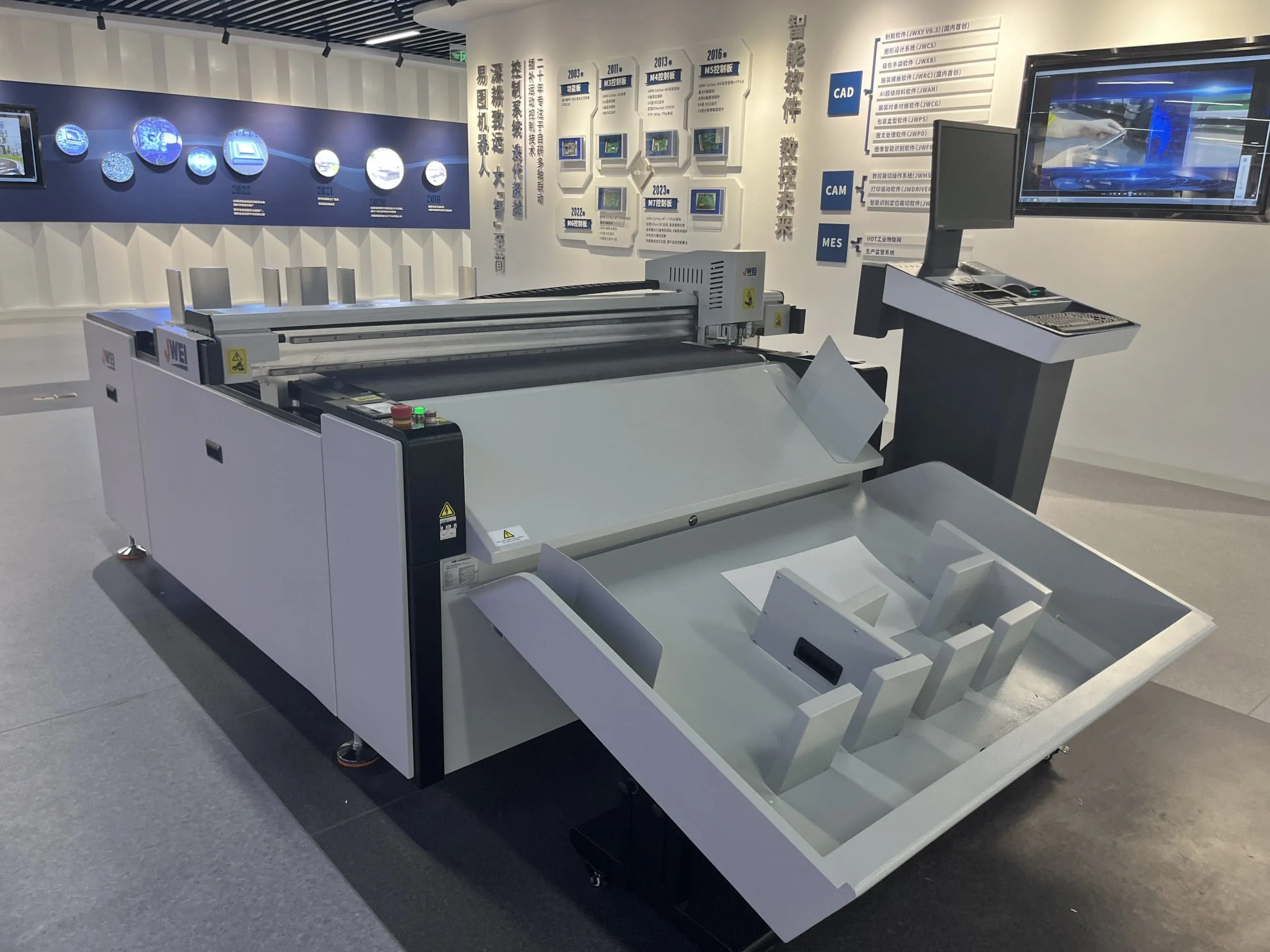
Overview of JWEI Digital Cutting Tools & Functions
1. Mini EOT (Electric Oscillating Tool)
-
Cutting Thickness: 0.1 ~ 6 mm
-
Key Function: Features a high-frequency eccentric oscillation mechanism (1.3W) to efficiently cut through semi-rigid and flexible materials with clean edges.
2. Active Rotary & Kiss-Cut Tools
-
Cutting Thickness: 0.1 ~ 0.8 mm (Active Cutting) / 0.1 ~ 0.2 mm (Kiss-Cut)
-
Key Function: Ideal for precision contour cutting and multi-layer film peeling. Kiss-cut tools offer superior blade durability for adhesive vinyl, stickers, and reflective sheets without cutting through the backing paper.
3. Heavy-Duty Router Tool
-
Cutting Thickness: Up to 15 mm
-
Key Function: Designed for high-density, rigid substrates such as Acrylic, MDF, ACM (Aluminium Composite Material), and epoxy boards.
4. Dual V-Cut Tool
-
Grooving Thickness: Up to 3 mm (bevel cutting up to 20 mm)
-
Key Function: Enables 0°, 15°, 22.5°, 30°, and 45° bevel cutting and grooving on cardboard, grey board, and honeycomb panels for seamless folding box production.
Frequently Asked Questions (FAQ)
-
Q: Can a single JWEI digital cutter switch between different tools automatically?
-
A: Yes. Advanced JWEI models support Automatic Tool Changers (ATC), allowing the machine to switch between routing, cutting, and creasing in a single automated workflow.
-
-
Q: How do I know which tool is right for my material?
-
A: Soft flexible materials typically use drag or oscillating knives, while rigid plastics and wood require high-speed router tools.
-
Looking for the right tool configuration for your factory? Explore JWEI Digital Cutting Systems or Contact Us Today for a professional recommendation!
This video provides a visual demonstration of the versatile cutting tools and capabilities featured on JWEI flatbed digital cutting systems.